


Mulching films are essential in berry cultivation – but most are made from fossil-based polyethylene and very difficult to recycle. ECOSYSTEM is turning berry-fruit crop waste into the biodegradable mulch films of the future, closing a circular loop where the remains of one harvest become the raw material for the next.
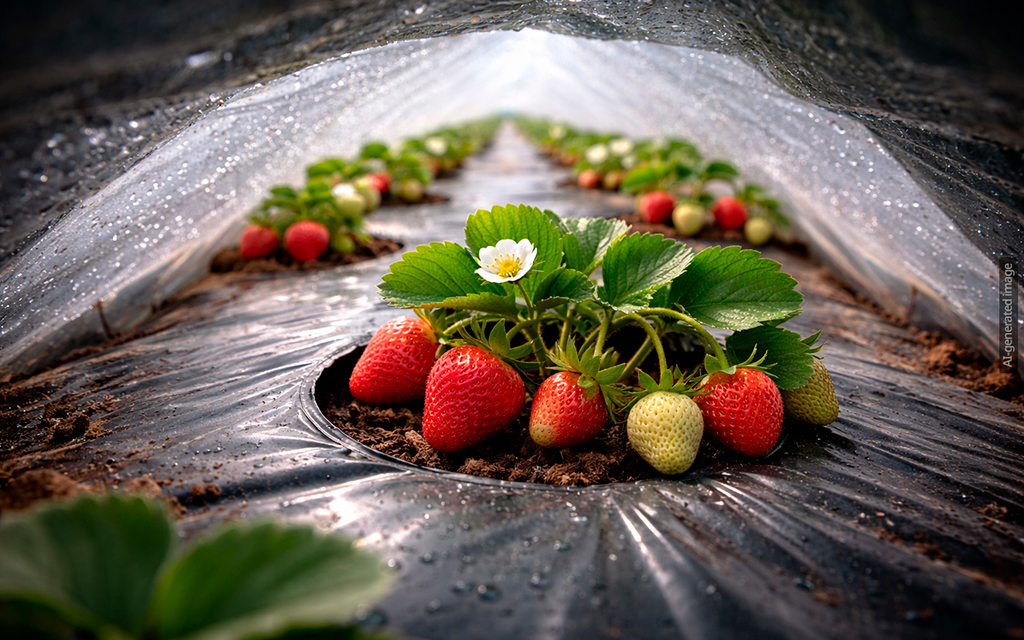
With the arrival of warmer weather, new products appear in fruit shops, such as strawberries, blueberries, blackberries and raspberries. If we take a look at the fields where they are grown, we will see mulching in action.
Mulching is a technique that involves laying a layer of inert material on the soil surface. In small vegetable gardens, this can be straw, wood chips, leaves or tree bark. However, on larger-scale farms, it is common to use polyethylene sheeting. This technique is also very useful for horticultural crops with a one-and-a-half-cycle growing season, such as strawberries, tomatoes, cucumbers, aubergines, courgettes, melons and watermelons.
This method of plastic mulching:
- Reduces evaporation of irrigation water and improves moisture retention.
- Prevents the fruit from coming into direct contact with the soil, reducing disease and improving cleanliness.
- Controls erosion and weeds, which is particularly useful on sloping or hard-to-access land.
- Improves soil aeration and reduces compaction.
- Optimises the use of water and fertilisers by directing them straight into the planting furrows.
- Increases soil temperature (by up to 3 ºC at a depth of 5 cm), bringing forward crop ripening, protecting the early stages of the harvest and improving yield.
When the time comes to remove these mulch films, they are mixed with soil and plant debris accumulated during cultivation, which can account for up to 80% of their weight. This mixture makes recycling significantly more difficult and expensive. In practice, a large proportion of these fossil-based plastics end up in landfill or are incinerated, and those that are not properly removed break down in the soil into microplastics, affecting biodiversity and the health of the agricultural ecosystem itself.
Furthermore, their production relies on non-renewable resources, adding pressure to a model that is unsustainable in the long term. Mulch films made from biodegradable plastics are emerging as an alternative to this problem. Given the difficulty and cost of recycling, they offer a simpler and more sustainable solution at the end of the crop cycle.
ECOSYSTEM works with the waste generated by the cultivation of berries to develop multifunctional biopolyesters and bioactive ingredients, combining sustainable technologies such as mechanochemistry and white biotechnology. It will be the first project to combine both techniques to produce biodegradable polymers and other eco-active materials, which will be used to manufacture new mulch films, as well as packaging for food and pharmaceutical products.
These biodegradable films will return to the fields to grow strawberries, blueberries, blackberries and raspberries, which in turn will generate new waste from which to produce more biopolyesters. This closes a cycle in which the remains of one harvest become the starting point for the next. At the end of their useful life, these materials will be reused or biodegrade, allowing the cycle to being anew.